Big week for the robot crowd. Figure just locked in a multi-factory rollout with a Fortune-100 manufacturer, meaning their glossy humanoid (Figure 02, powered by OpenAI brains) is moving from YouTube demos to actual 24/7 shifts. Hot on their heels, Agility is shipping Digit to Amazon warehouses, Boston Dynamics quietly sold another batch of Stretch arms, and 1X is putting NEO betas into real homes for pilot testing. The timeline is compressing faster than most of us expected: real revenue-generating humanoids in 2026, not 2035.
Here’s the question nobody is asking loudly enough:
What jobs are we about to invent that only make economic sense once the employee costs $8 an hour in depreciation instead of $38 an hour in wages + benefits?
There are experiences we’ve always wanted to give guests (shoppers, trade-show attendees, theme-park visitors) that were simply too expensive to staff with humans 12 hours a day, 360 days a year. Humanoid robots are about to flip that spreadsheet cell from red to black, and when they do, entire categories of jobs appear out of nowhere, not just for robots, but for humans too.
Think of these bots as the ultimate NPCs with haptics. They’re not replacing the cast member who greets you at the gate; they’re adding entirely new characters that no park or public venue has ever been able to afford.
At the local high-end mall in 2032, you'll follow a fully-animatronic Dorothy Gale who grabs your hand with soft-haptic-capable gloves and literally pulls you down an AR-enhanced yellow brick road. You see her through passthrough VR sunglasses, which you own since that's what Apple Vision Pro has become. No human could do eight straight hours of skipping and hand-in-hand with strangers and come back and do it again daily for less than $50 daily on the company's dime. That's why that category of job can't exist. YET.


Fast-forward to PBExpo 2035. You walk up to the Boeing pavilion and Orville Wright is standing next to the original 1903 Flyer mockup, waving at you. He shakes your hand and walks you around the wing, explaining center-of-pressure math while gesturing at invisible control surfaces that light up in your XR sunglasses. When you ask about the coin flip for who flew first, he laughs exactly like the archival recordings. The actor budget for that booth just dropped from six figures to low five figures per show, so Boeing sends the act on the road like a carnival, appearing at every mall in America for free.
And without a doubt, at some point, Disney World will have an Abraham Lincoln who doesn't just recite the Gettysburg Address from a stage—he walks the fields with you at dusk, points to Cemetery Ridge, and quietly talks through the political calculus of issuing the Emancipation Proclamation mid-war. Kids will gaze in awe. Parents will extend their stay another day. The attraction will pay for itself, and it'll need a bunch of technicians to bolt a new arm or leg onto the bots.
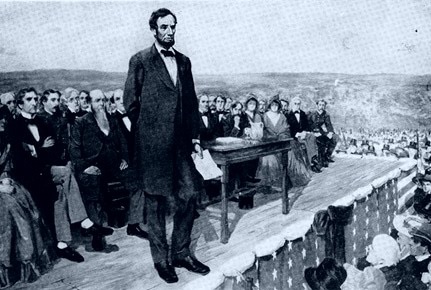
None of these jobs existed yesterday because the ROI didn’t pencil out for human labor. Immersive theater is just one new category robots and XR will help crack open. In the productions who have budgets to afford it, live actors will join the NPCs. Customers will appreciate the nuanced touched of actual human actors. It’ll be like Broadway, Hollywood, and the videogame industry smashed together to generate something we’ve never seen before, something worth getting up of the couch and going to the mall to see.
I’ve got immersive theater on the brain as you can tell.
I’m trying to build exactly what I’m describing in game engine right now. Obviously, we don’t have humanoid robots capable of driving it yet, but I think early immersive theater will have live actors wearing AI-rendered masks, like a Halloween mask that can talk. I’m prototyping it in LBEAST right now (my current open-source Unity/Unreal plugin project). The repo is free, battle-tested in real arcades and trade-show floors, and ready for the first developer who wants to script Dorothy’s wrist torque when she tugs a 6-year-old toward Oz.
Bottom line: the humanoid wave isn’t coming to delete your job. In immersive entertainment, it’s coming to fund jobs that were always too magical to be profitable—until now.
AJ Campbell,
Tech Lead/Senior XR Programmer Guy
GitHub: https://github.com/ajcampbell1333
Portfolio: https://ajcampbell.info